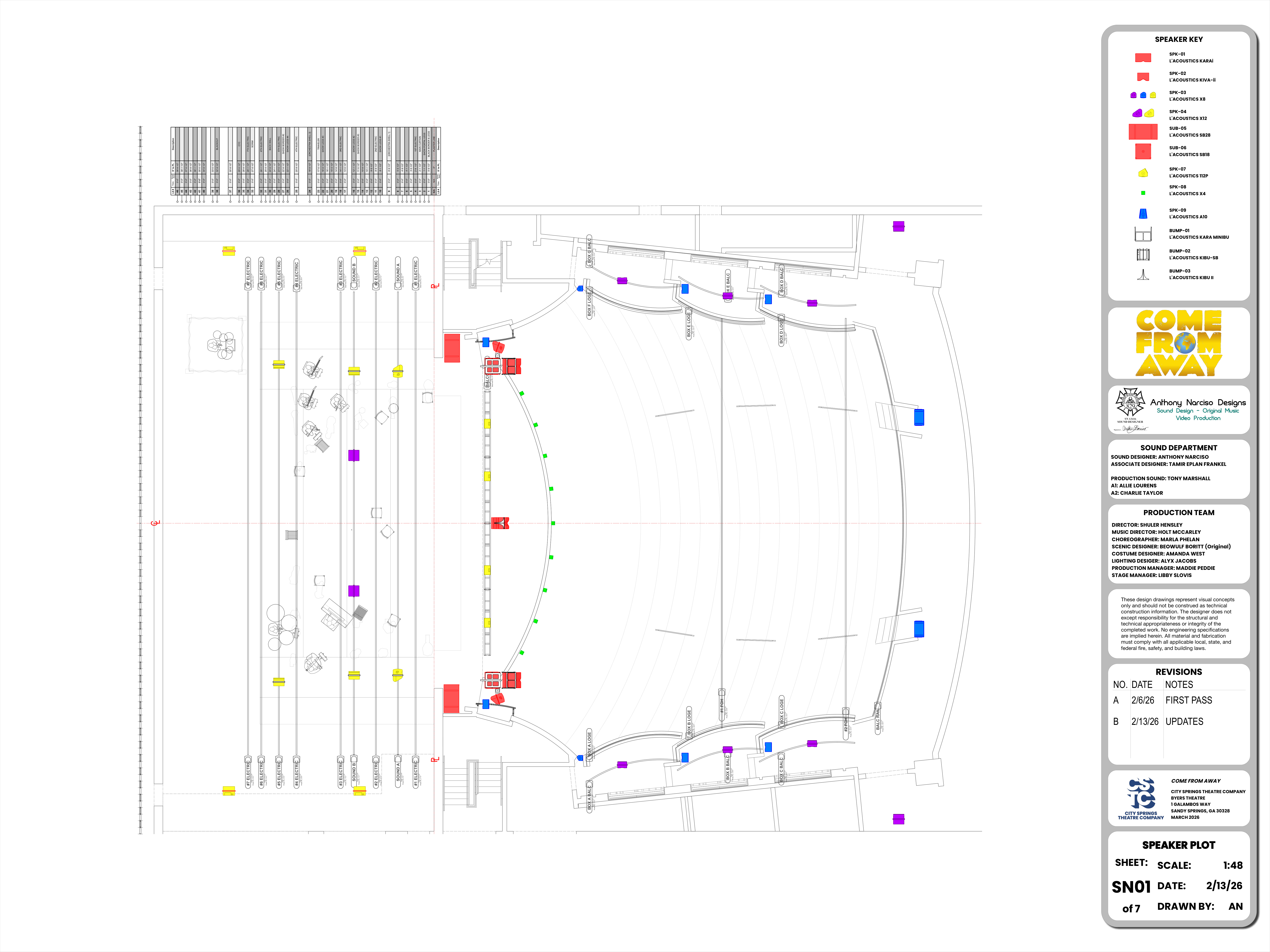
Plots
Scaled plan views of the venue showing the exact placement, model, and orientation of every loudspeaker and instrument microphone in the system. Includes speaker plots (plan, overhead, and ground views) and band/orchestra mic plots. The primary reference for the sound team during load-in and focus.
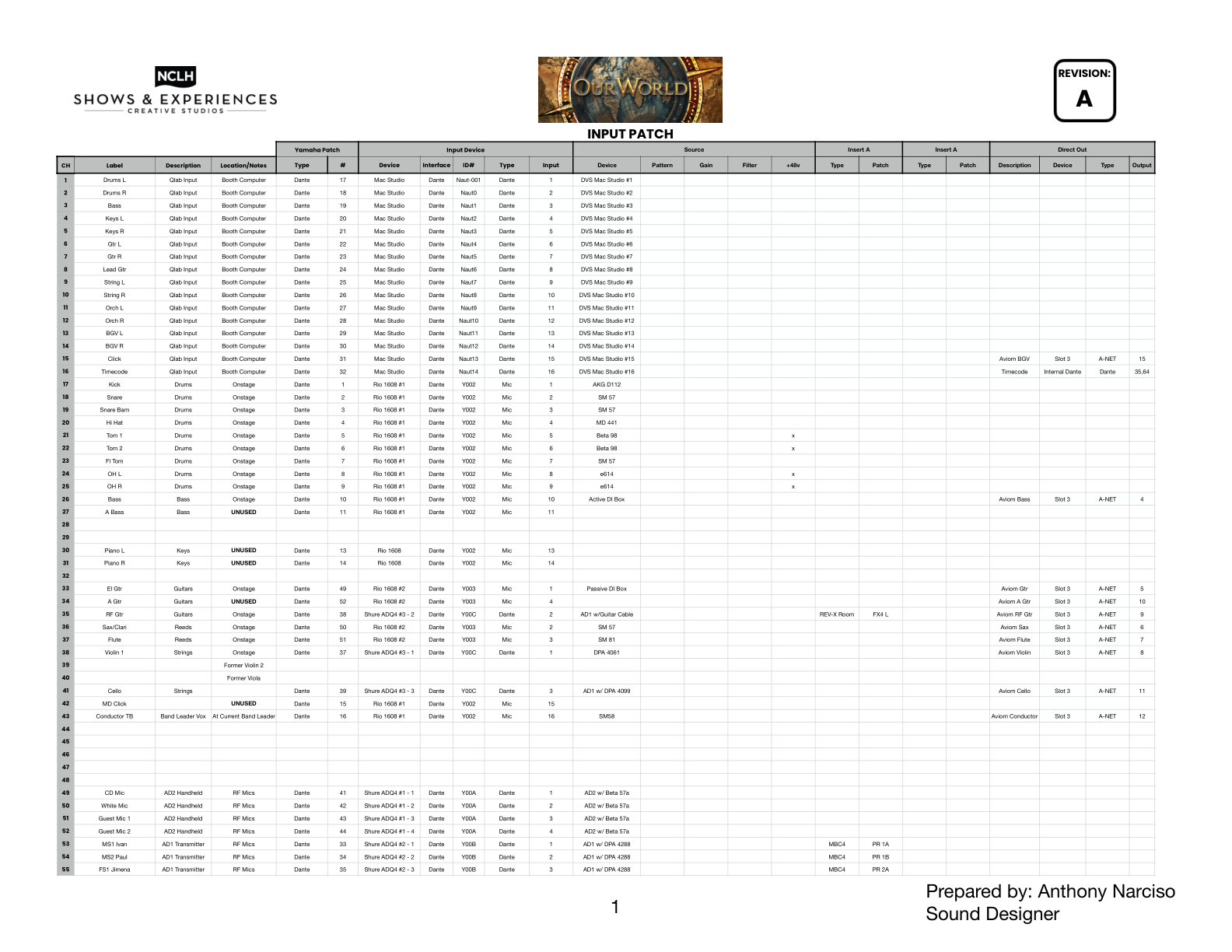
Input / Output Patch
A channel-by-channel map of every input and output on the mixing console — source devices, signal routing, insert processing, direct outputs, and copy audio paths. The definitive reference for how every signal enters and leaves the desk.
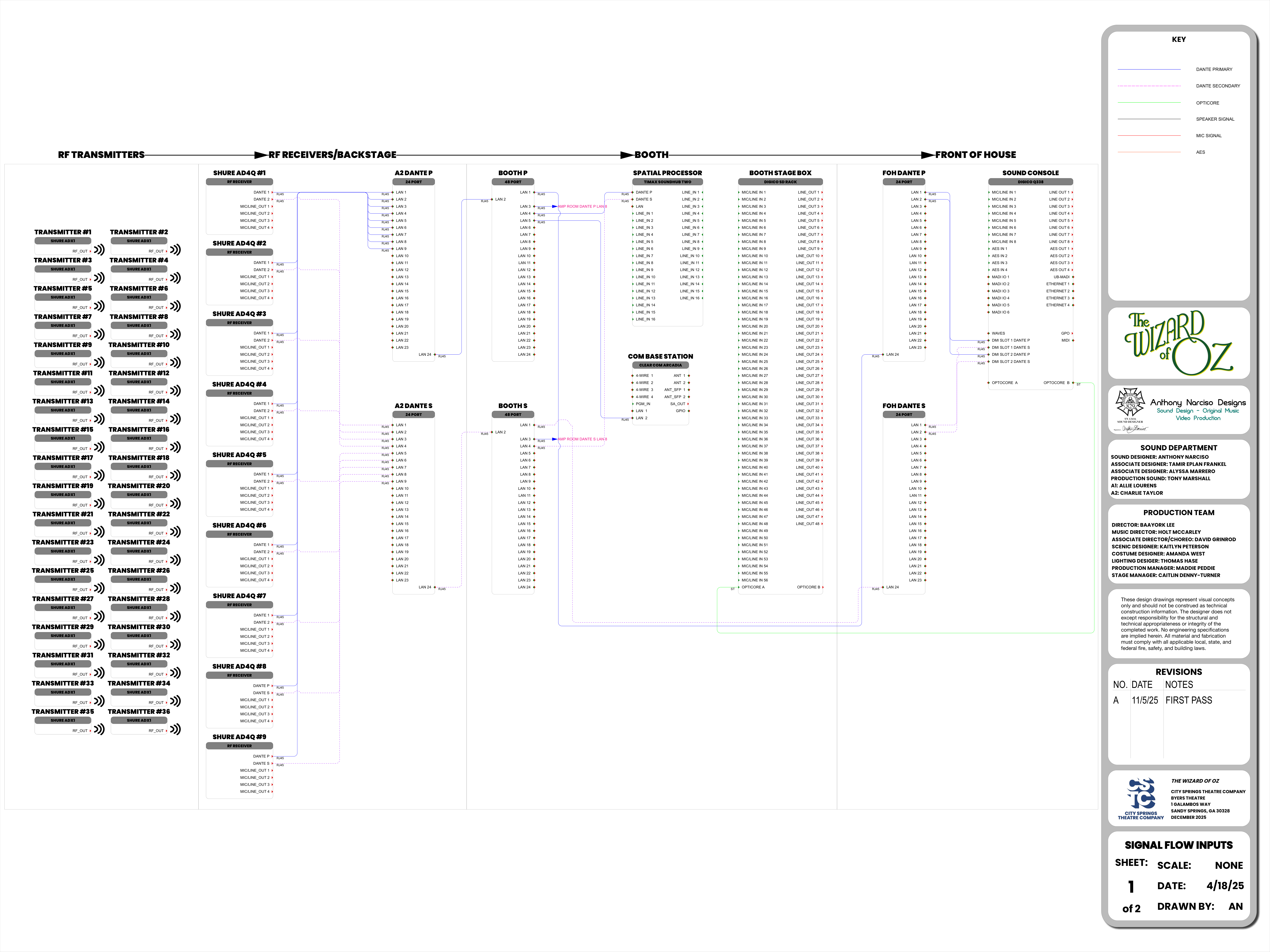
Signal Flow
A comprehensive diagram mapping every audio signal path from source to destination — microphones through processing, mixing, spatial routing, amplification, and finally to loudspeakers. The backbone of the entire system.
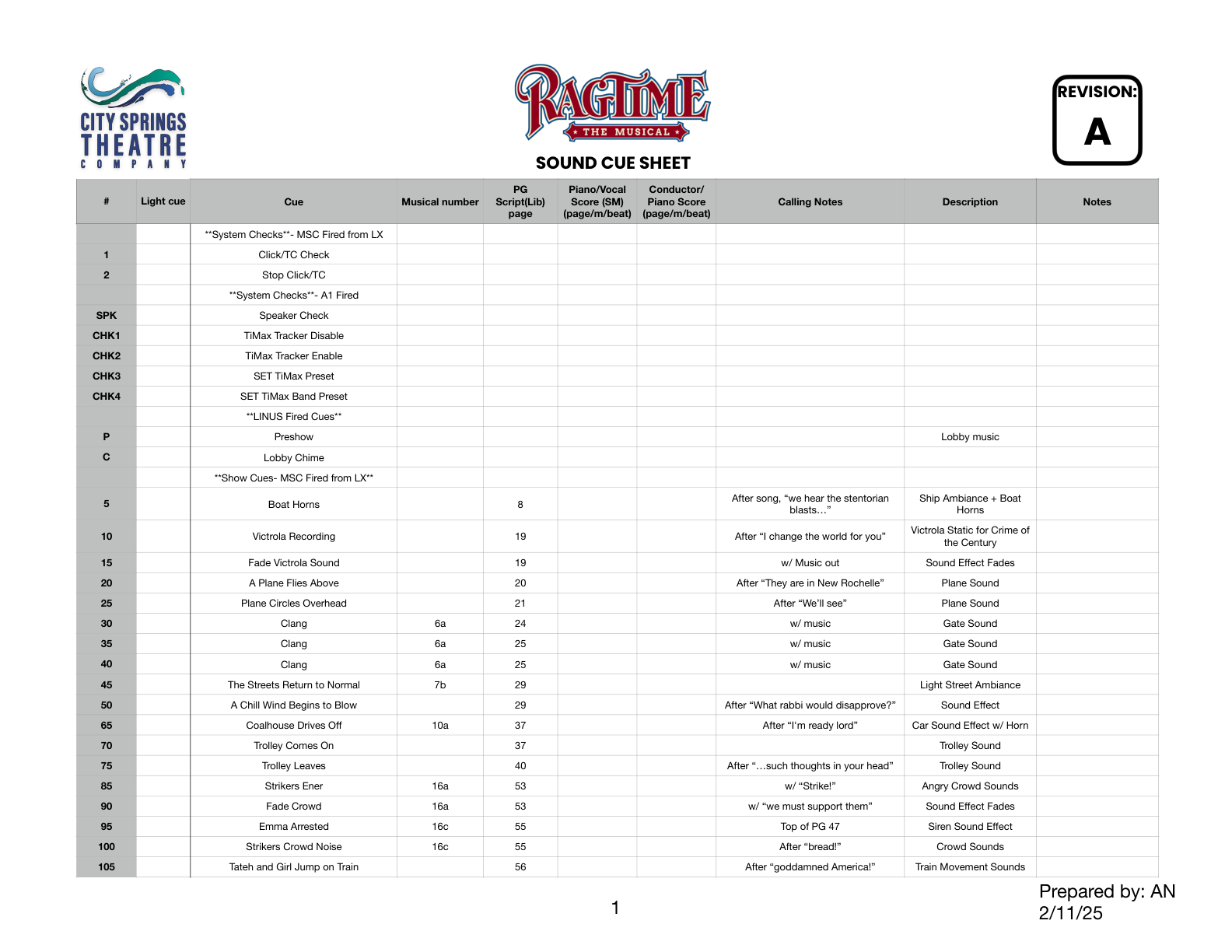
Sound Cue Sheet
A cue-by-cue breakdown of every sound event in the show — tied to script page, musical number, and calling placement. This is the roadmap that guides the stage manager and A1 through every performance.
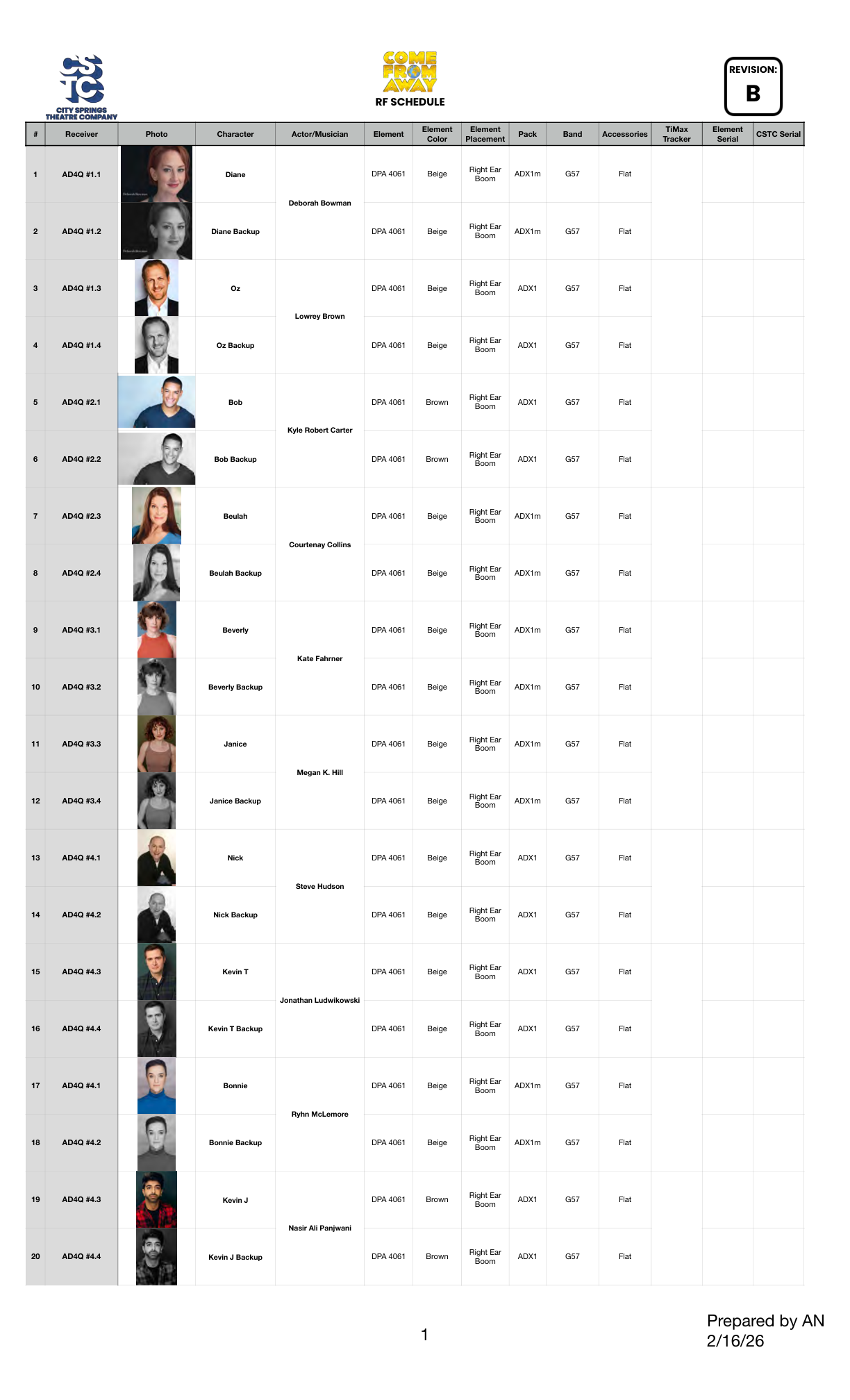
RF Schedule
A detailed assignment chart for every wireless microphone channel — mapping character, actor, element type, transmitter pack, frequency band, and body placement. Essential for the A2 and wardrobe team.
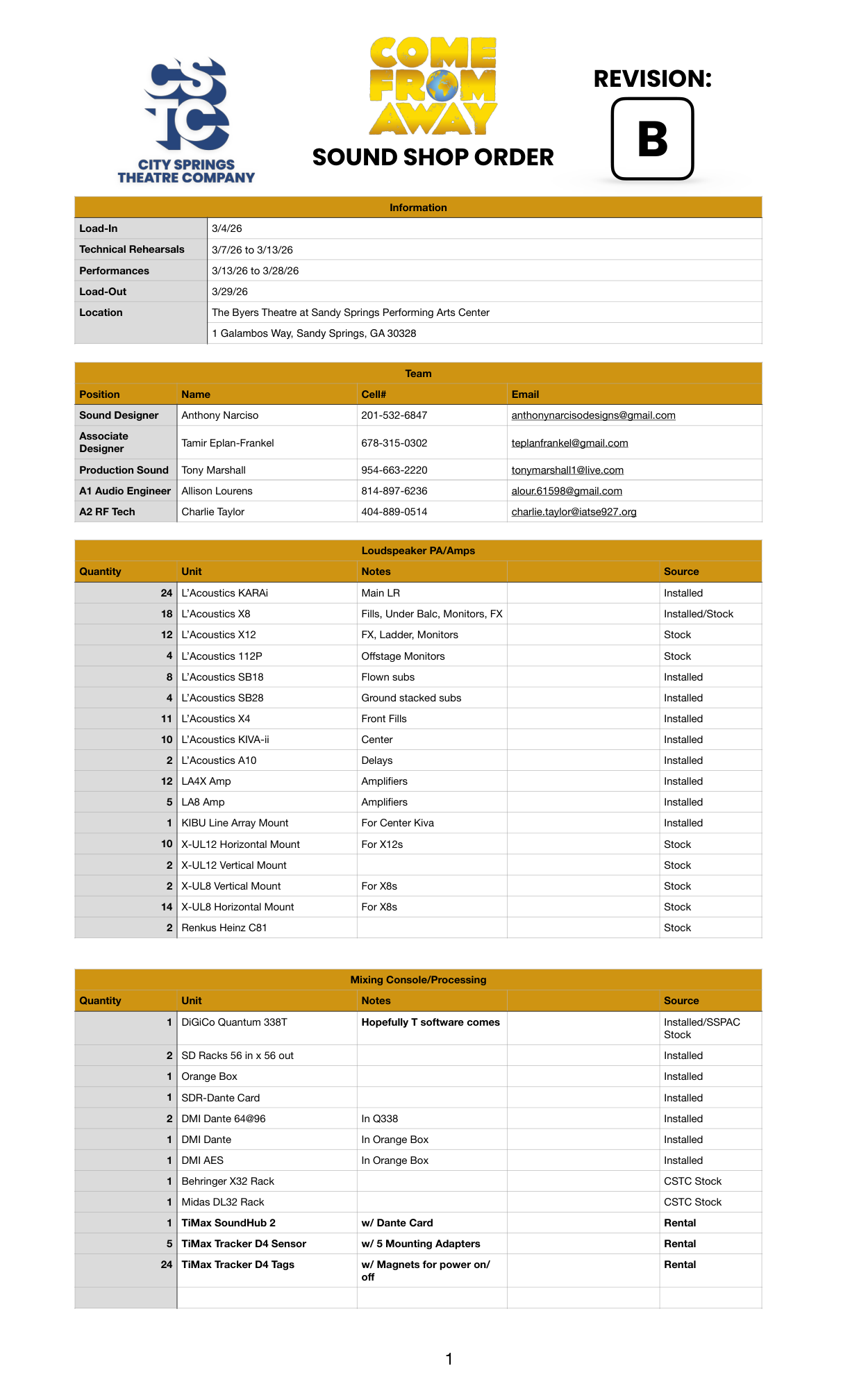
Sound Shop Order
The complete inventory of every piece of equipment needed for the production — loudspeakers, consoles, microphones, processing, cable, and expendables. Organized by category with source and quantity for each item.